Power Chains for Braces: How Many Types Are There and Why They Matter
Last updated: 29 May 2026
4715 Views
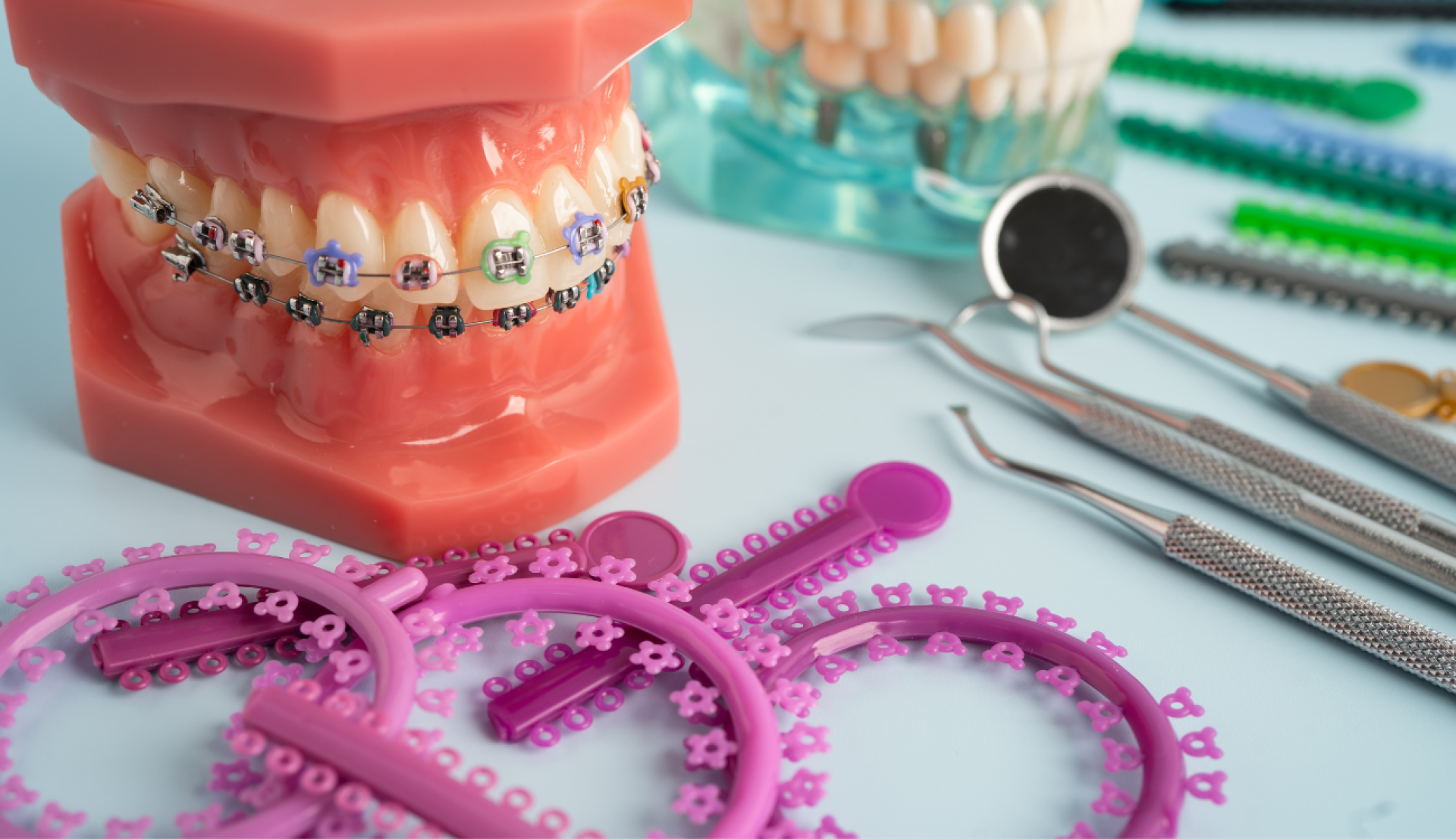
For people undergoing orthodontic treatment, one exciting milestone is the day the dentist says it’s time to wear a power chain. This usually means that your teeth have already begun to align properly and the treatment is moving into the stage of closing gaps between teeth.
However, many patients still wonder how many types of power chains for braces exist and why some people start wearing them early in their treatment while others may not need them until later.
The main function of a power chain is to create continuous pressure that moves teeth closer together. Understanding the different power chain types can help patients prepare for the slight tightness or discomfort that may occur during the first few days. It also helps patients learn how to properly care for this orthodontic tool so that the treatment progresses smoothly and delivers the best results within the planned timeline.
What Is a Power Chain for Braces and What Does It Do?
Before discussing how many types of power chains for braces there are, it’s important to understand what this orthodontic device actually is.
A power chain is an elastic chain used in orthodontic treatment. It appears as a long strip of small elastic rings connected together, forming a chain-like structure. These chains are made from a highly flexible material called elastomer, which allows them to stretch while maintaining consistent tension.
The main function of a power chain is to provide continuous pulling force across multiple teeth at the same time. This force helps move several teeth in the same direction and is commonly used to close gaps between teeth.
Power chains are often applied after tooth extraction or when teeth have already begun to align properly. The steady pressure from the chain gradually pulls the teeth closer together in a controlled and organized way. Compared with standard O-rings, which only hold the archwire to each bracket individually, power chains can deliver stronger and more continuous force, making them more effective for closing spaces and refining tooth alignment during orthodontic treatment.
How Many Types of Power Chains Are There? A Detailed Explanation
Orthodontists choose the type of power chain based on the size of the gap between teeth and the position of each tooth. When discussing how many types of power chains for braces there are, they are typically classified based on the distance between each elastic loop.
In general, power chains can be divided into three main types, each designed for different orthodontic purposes.
1. Closed Power Chain (Short Spacing)
A closed power chain has the smallest distance between the loops, with little to no space between each circular ring.
Because the loops are tightly connected, this type provides stronger and more concentrated pulling force. Dentists often use closed power chains in situations where:
Teeth are already relatively close together
Only small gaps need to be closed
Extra tightening is needed to bring teeth closer together
This type helps create a firm and consistent force, making it effective for final adjustments during orthodontic treatment.
2. Medium Power Chain (Standard Spacing)
The medium power chain has a small gap between each loop, connected by short elastic bridges.
This is the most commonly used type of power chain in orthodontic treatment because it works well for teeth with normal spacing and moderate gaps. It provides balanced force—strong enough to move teeth efficiently but not as tight as the closed power chain.
Dentists often choose this type when:
Teeth have moderate spacing
Several teeth need to move gradually together
Balanced and controlled force is required
3. Open Power Chain (Wide Spacing)
An open power chain has the largest spacing between the loops. The greater distance between each ring allows it to stretch further.
This type is commonly used when:
Teeth are far apart
The orthodontist needs to span across certain teeth without applying direct force to them
Teeth need to move over a longer distance
The wider spacing helps distribute the pulling force more evenly, allowing teeth to move gradually into the correct position without excessive pressure.
Who Needs to Wear a Power Chain in Braces?
Not everyone undergoing orthodontic treatment needs to wear a power chain. The timing and necessity depend on each patient’s dental condition and treatment plan. Orthodontists typically decide based on several key factors.
People with Gaps Between Their Teeth: Patients who have naturally spaced teeth or gaps caused by tooth extraction during orthodontic treatment often require power chains. The elastic chain helps pull multiple teeth together simultaneously, allowing the gaps to close gradually and evenly.
During the Gap-Closing Stage : Once the teeth have already aligned into a relatively straight row, the orthodontist may begin using a power chain. At this stage, the goal is to close remaining spaces between teeth so that the dental arch becomes more compact and properly aligned.
Controlling the Direction of Tooth Movement In some cases, dentists use power chains to control the direction of tooth movement. The chain can help prevent certain teeth from drifting out of position while others are being adjusted, ensuring the teeth move according to the planned orthodontic design.
Things to Know and What to Expect When You First Start Wearing a Power Chain
After understanding the different types of orthodontic power chains, patients should also be prepared for the tightness that comes with wearing them. Power chains create a stronger and more continuous pulling force than regular elastic ligatures.
During the first 1–3 days after the power chain is installed, it is common to experience:
Tightness or pressure in the teeth
Mild soreness or discomfort
Difficulty chewing certain foods
These sensations are completely normal and indicate that the teeth are beginning to move into their new positions.
Another important thing to know is that power chains can easily absorb food pigments. If you choose a light-colored chain and frequently consume strongly colored foods such as sour curry, yellow curry, or coffee, the chain may become visibly stained.
For this reason, selecting a power chain color that matches your eating habits and lifestyle can help maintain a cleaner and more attractive appearance throughout your orthodontic treatment.
How to Clean and Care for Orthodontic Power Chains
Because power chains have a linked, chain-like structure that is more complex than regular elastic ligatures, food particles can become trapped more easily. Proper oral hygiene is therefore very important to maintain oral health and prevent complications during orthodontic treatment.
Here are several recommended ways to keep your power chain clean:
Use an interdental brush
An interdental brush is an essential tool for cleaning under the archwire and between the small loops of the power chain, where a regular toothbrush may not be able to reach effectively.
Rinse your mouth after meals
Rinsing your mouth with water after eating helps remove food debris and colored residues before they accumulate around the braces and elastic chain.
Brush your teeth at least twice a day
Regular brushing, combined with orthodontic floss or floss threaders, helps prevent tooth decay and gum disease that may occur while the gaps between teeth are being closed.
Power Chains: A Small but Important Tool for a Beautiful Smile
Understanding the different types of power chains and their functions can help reduce anxiety when it is time for orthodontic adjustments. Wearing a power chain is often a positive sign that treatment has entered a stage where noticeable improvements in tooth alignment begin to appear.
Patient cooperation—especially maintaining good oral hygiene and attending scheduled dental appointments—is one of the most important factors that helps teeth move into their proper position more efficiently.
For anyone who has additional questions about orthodontic appliances or is looking for a trusted place to begin orthodontic treatment, Pasook Dental Clinic offers close and professional care. The clinic provides consultations with specialized dentists in a clean, safe, and internationally standardized environment, using modern dental technology to help design healthy and confident smiles.
With multiple conveniently located branches, patients can easily access personalized dental care and feel confident that every step of their treatment will be handled with attention and expertise to achieve strong oral health and a beautiful smile.
However, many patients still wonder how many types of power chains for braces exist and why some people start wearing them early in their treatment while others may not need them until later.
The main function of a power chain is to create continuous pressure that moves teeth closer together. Understanding the different power chain types can help patients prepare for the slight tightness or discomfort that may occur during the first few days. It also helps patients learn how to properly care for this orthodontic tool so that the treatment progresses smoothly and delivers the best results within the planned timeline.
What Is a Power Chain for Braces and What Does It Do?
Before discussing how many types of power chains for braces there are, it’s important to understand what this orthodontic device actually is.
A power chain is an elastic chain used in orthodontic treatment. It appears as a long strip of small elastic rings connected together, forming a chain-like structure. These chains are made from a highly flexible material called elastomer, which allows them to stretch while maintaining consistent tension.
The main function of a power chain is to provide continuous pulling force across multiple teeth at the same time. This force helps move several teeth in the same direction and is commonly used to close gaps between teeth.
Power chains are often applied after tooth extraction or when teeth have already begun to align properly. The steady pressure from the chain gradually pulls the teeth closer together in a controlled and organized way. Compared with standard O-rings, which only hold the archwire to each bracket individually, power chains can deliver stronger and more continuous force, making them more effective for closing spaces and refining tooth alignment during orthodontic treatment.
How Many Types of Power Chains Are There? A Detailed Explanation
Orthodontists choose the type of power chain based on the size of the gap between teeth and the position of each tooth. When discussing how many types of power chains for braces there are, they are typically classified based on the distance between each elastic loop.
In general, power chains can be divided into three main types, each designed for different orthodontic purposes.
1. Closed Power Chain (Short Spacing)
A closed power chain has the smallest distance between the loops, with little to no space between each circular ring.
Because the loops are tightly connected, this type provides stronger and more concentrated pulling force. Dentists often use closed power chains in situations where:
Teeth are already relatively close together
Only small gaps need to be closed
Extra tightening is needed to bring teeth closer together
This type helps create a firm and consistent force, making it effective for final adjustments during orthodontic treatment.
2. Medium Power Chain (Standard Spacing)
The medium power chain has a small gap between each loop, connected by short elastic bridges.
This is the most commonly used type of power chain in orthodontic treatment because it works well for teeth with normal spacing and moderate gaps. It provides balanced force—strong enough to move teeth efficiently but not as tight as the closed power chain.
Dentists often choose this type when:
Teeth have moderate spacing
Several teeth need to move gradually together
Balanced and controlled force is required
3. Open Power Chain (Wide Spacing)
An open power chain has the largest spacing between the loops. The greater distance between each ring allows it to stretch further.
This type is commonly used when:
Teeth are far apart
The orthodontist needs to span across certain teeth without applying direct force to them
Teeth need to move over a longer distance
The wider spacing helps distribute the pulling force more evenly, allowing teeth to move gradually into the correct position without excessive pressure.
Who Needs to Wear a Power Chain in Braces?
Not everyone undergoing orthodontic treatment needs to wear a power chain. The timing and necessity depend on each patient’s dental condition and treatment plan. Orthodontists typically decide based on several key factors.
People with Gaps Between Their Teeth: Patients who have naturally spaced teeth or gaps caused by tooth extraction during orthodontic treatment often require power chains. The elastic chain helps pull multiple teeth together simultaneously, allowing the gaps to close gradually and evenly.
During the Gap-Closing Stage : Once the teeth have already aligned into a relatively straight row, the orthodontist may begin using a power chain. At this stage, the goal is to close remaining spaces between teeth so that the dental arch becomes more compact and properly aligned.
Controlling the Direction of Tooth Movement In some cases, dentists use power chains to control the direction of tooth movement. The chain can help prevent certain teeth from drifting out of position while others are being adjusted, ensuring the teeth move according to the planned orthodontic design.
Things to Know and What to Expect When You First Start Wearing a Power Chain
After understanding the different types of orthodontic power chains, patients should also be prepared for the tightness that comes with wearing them. Power chains create a stronger and more continuous pulling force than regular elastic ligatures.
During the first 1–3 days after the power chain is installed, it is common to experience:
Tightness or pressure in the teeth
Mild soreness or discomfort
Difficulty chewing certain foods
These sensations are completely normal and indicate that the teeth are beginning to move into their new positions.
Another important thing to know is that power chains can easily absorb food pigments. If you choose a light-colored chain and frequently consume strongly colored foods such as sour curry, yellow curry, or coffee, the chain may become visibly stained.
For this reason, selecting a power chain color that matches your eating habits and lifestyle can help maintain a cleaner and more attractive appearance throughout your orthodontic treatment.
How to Clean and Care for Orthodontic Power Chains
Because power chains have a linked, chain-like structure that is more complex than regular elastic ligatures, food particles can become trapped more easily. Proper oral hygiene is therefore very important to maintain oral health and prevent complications during orthodontic treatment.
Here are several recommended ways to keep your power chain clean:
Use an interdental brush
An interdental brush is an essential tool for cleaning under the archwire and between the small loops of the power chain, where a regular toothbrush may not be able to reach effectively.
Rinse your mouth after meals
Rinsing your mouth with water after eating helps remove food debris and colored residues before they accumulate around the braces and elastic chain.
Brush your teeth at least twice a day
Regular brushing, combined with orthodontic floss or floss threaders, helps prevent tooth decay and gum disease that may occur while the gaps between teeth are being closed.
Power Chains: A Small but Important Tool for a Beautiful Smile
Understanding the different types of power chains and their functions can help reduce anxiety when it is time for orthodontic adjustments. Wearing a power chain is often a positive sign that treatment has entered a stage where noticeable improvements in tooth alignment begin to appear.
Patient cooperation—especially maintaining good oral hygiene and attending scheduled dental appointments—is one of the most important factors that helps teeth move into their proper position more efficiently.
For anyone who has additional questions about orthodontic appliances or is looking for a trusted place to begin orthodontic treatment, Pasook Dental Clinic offers close and professional care. The clinic provides consultations with specialized dentists in a clean, safe, and internationally standardized environment, using modern dental technology to help design healthy and confident smiles.
With multiple conveniently located branches, patients can easily access personalized dental care and feel confident that every step of their treatment will be handled with attention and expertise to achieve strong oral health and a beautiful smile.
Related Content

Wondering how many types of impacted wisdom teeth there are? Learn about each type, severity levels, warning risks, and detailed treatment steps so you can prepare before visiting a dentist.

What causes swollen gums around molars? Learn about common causes, including wisdom teeth, adjacent tooth decay, cracked teeth, root abscesses, and subgingival tartar, plus how to recognize the symptoms and when to see a dentist urgently.

What Are Tilted Teeth? Is It Dangerous If Left Untreated? Solutions and Estimated Costs