What Causes Swollen Gums Around Molars? Common Causes and How to Recognize the Symptoms
Last updated: 26 Sept 2026
94 Views
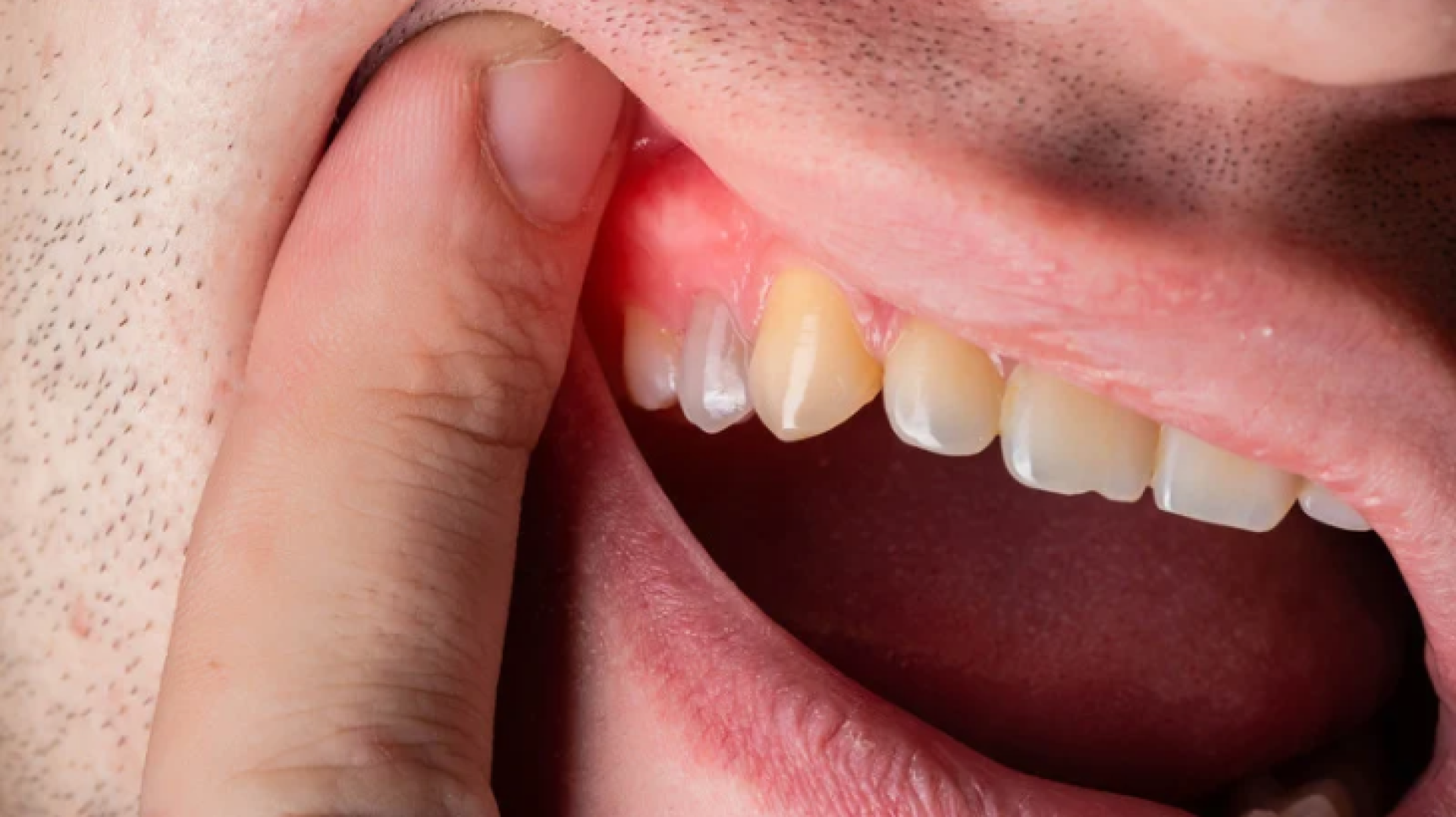
Swollen gums around molars can have several localized causes. Common ones include wisdom teeth with inflamed gum tissue, decay between adjacent teeth, cracked teeth, tooth root abscesses, and subgingival tartar associated with deep periodontal pockets. Molars are located toward the back of the mouth, making them more difficult to clean thoroughly and potentially increasing the risk of plaque and food accumulation.
Swollen gums around a molar can be more than a simple hygiene issue. Because molars are harder to reach, have grooves and pits on their chewing surfaces, and may have multiple roots, inflammation in this area can sometimes be related to a specific problem within the tooth or surrounding tissues.
The cause may range from food trapped between the teeth to a wisdom tooth infection, tooth decay, a cracked tooth, or an infection around the root. This article explains the most common causes of swollen gums around molars, how symptoms may differ between upper and lower molars, how to observe the symptoms, and which warning signs mean you should seek dental care promptly.
Why Are Swollen Gums Around Molars More Common Than Around Front Teeth?
One reason is their location. Molars are positioned farther back in the mouth, making it harder to position a toothbrush properly around the last molars. Plaque can therefore accumulate around the gumline and behind the last molar if these areas are not cleaned carefully.
Another factor is tooth anatomy. Molars have broad chewing surfaces with grooves and pits that can trap food particles. The contact areas between back teeth can also make food more likely to become lodged between the teeth.
Molars may also have multiple roots. The area where the roots separate, known as the furcation, can become difficult to clean if periodontal disease progresses into this area.
Finally, molars withstand substantial chewing forces. This can contribute to problems such as cracks, fractures, and damage to large fillings or crowns.
Together, these factors mean that swollen gums around molars may sometimes point to a specific dental problem rather than simply poor overall oral hygiene.
Cause #1: Wisdom Teeth and Pericoronitis
If swollen gums around molars occur around the very back tooth, particularly in teenagers and young adults, a wisdom tooth is one possible cause. A partially erupted wisdom tooth may remain partly covered by gum tissue. This creates an area where food debris and bacteria can accumulate, leading to inflammation known as pericoronitis.
Typical symptoms may include swelling and tenderness around the last molar, unpleasant breath or taste, difficulty opening the mouth, and pain that may radiate toward the ear or jaw. Some cases can recur periodically.
Pain relievers may temporarily reduce discomfort, but they do not address an impacted or problematic wisdom tooth. A dentist may recommend an X-ray to evaluate its position and determine whether wisdom tooth removal is appropriate.
However, not every wisdom tooth needs to be removed. A wisdom tooth that has erupted fully, is positioned appropriately, and can be kept clean may be suitable for monitoring rather than surgery. The decision should be made based on an examination and, when appropriate, dental imaging.
Cause #2: Decay Between Adjacent Teeth
One commonly overlooked cause of swollen gums around molars is tooth decay on the surface between two teeth.
This type of decay can be difficult to see in a mirror because it is hidden between the teeth. Dental X-rays may be needed to detect it. As decay progresses, the area can trap food and contribute to localized gum inflammation.
Clues that may point toward this cause include food repeatedly becoming trapped in the same space, an unusual odor from that area, localized gum swelling or bleeding, and sensitivity to cold or sweet foods.
Treatment depends on the extent of the decay. The dentist may remove the decayed portion and restore the tooth with a dental filling, while also correcting the shape and contact between the teeth when necessary.
Repeatedly picking at the area with a toothpick does not solve the underlying problem and may further irritate or injure the gums.
Cause #3: A Cracked Molar or Root Fracture
Molars are exposed to substantial chewing forces, making them susceptible to cracks and fractures. The risk can be higher in teeth with large existing fillings or teeth that have undergone root canal treatment.
A crack may develop from biting hard objects or from repeated stress, including tooth grinding.
If a crack extends toward the root, bacteria can enter the affected area and cause inflammation around the tooth. This may result in swollen gums around one particular molar that repeatedly returns despite good oral hygiene.
Possible clues include sharp pain when releasing a bite, discomfort when chewing on a particular part of the tooth, or a small area of gum swelling that repeatedly appears beside the same tooth.
Small cracks may not always be visible on a conventional dental X-ray. A dentist may therefore use bite tests, transillumination, clinical examination, or other diagnostic methods.
Treatment depends on the location and severity of the crack. Some teeth may be restored with a crown, while teeth with extensive fractures that cannot be predictably restored may need to be extracted. Tooth extraction is generally considered only after the dentist determines that the tooth cannot be adequately preserved.
Cause #4: A Tooth Root Abscess
When deep tooth decay reaches the dental pulp, bacteria can infect the tissue inside the tooth. If the infection spreads through the root, an abscess may develop around the root tip.
The infection can sometimes drain through the surrounding bone and gum, producing a small bump that may look like a pimple beside the tooth.
Possible symptoms include throbbing pain, pain when biting, sensitivity or pressure around the tooth, swelling, and an unpleasant or salty taste if drainage occurs. Fever or swollen lymph nodes may occur when infection becomes more extensive.
One important point is that pain can decrease after an abscess drains. This does not necessarily mean that the infection has been cured. The underlying source still needs dental treatment.
Depending on the condition of the tooth, treatment may involve root canal treatment or extraction. Antibiotics may be prescribed in selected cases, particularly when there are signs of systemic involvement or spreading infection, but antibiotics alone generally do not eliminate the source of a tooth infection.
Cause #5: Subgingival Tartar and Deep Periodontal Pockets
When plaque remains around the gumline, it can mineralize and become tartar (calculus), which cannot be removed effectively with ordinary brushing.
As periodontal disease progresses, inflammation can extend deeper around the tooth and contribute to periodontal pocket formation and supporting bone loss.
Molars can be particularly challenging because they may have multiple roots and furcation areas that are difficult to clean once periodontal disease becomes advanced.
Symptoms may include swollen gums around a molar with relatively little pain, frequent bleeding, persistent bad breath, gum recession, pus around the gums, or tooth mobility in more advanced cases.
Treatment may involve professional dental scaling and, when periodontal pockets and subgingival deposits are present, scaling and root planing. More advanced cases may require assessment by a periodontist.
Bone that has already been lost because of periodontal disease does not normally regenerate on its own, although selected periodontal regenerative procedures may be appropriate in specific cases.
Cause #6: Food Trapped Between Molars
One of the simpler and more common causes is food becoming trapped between the molars.
Fibrous foods, seeds, or small food particles can become lodged between the teeth or beneath the gumline and irritate the surrounding tissue. The swelling may develop shortly after eating and remain localized to one specific area.
If the food is removed and the area can be cleaned properly, the irritation may improve.
Use dental floss or an appropriate interdental cleaner gently rather than repeatedly poking the gum with a sharp toothpick. If food becomes trapped in the same space repeatedly, however, there may be an underlying issue such as decay, a damaged filling, an abnormal contact between the teeth, or tooth movement that should be evaluated by a dentist.
Cause #7: A Tilted Molar After Losing a Neighboring Tooth
When a tooth is missing and the space is left untreated, neighboring teeth may gradually shift or tilt toward the empty space. The opposing tooth may also move into the space.
This can create an unusually deep, difficult-to-clean area beside a molar. Plaque and food can accumulate there, potentially contributing to recurring swollen gums around molars.
A tilted molar can also alter the way chewing forces are distributed.
Treatment depends on the overall situation and may involve improved cleaning around the affected area, orthodontic treatment, or replacing the missing tooth. In some cases, tooth replacement may be considered to restore function and help prevent further tooth movement.
Cause #8: Poorly Fitting Fillings or Crowns and Tooth Grinding
A filling or crown with an overhanging or poorly fitting margin can create a plaque-retentive area that is difficult to clean. This may result in localized gum redness, swelling, and bleeding around the restoration.
A dentist can examine the restoration and determine whether it needs adjustment or replacement.
Bruxism (teeth grinding) is another factor that can affect molars. Excessive or repeated biting forces may contribute to tooth wear, cracks, muscle discomfort, or sensitivity. However, gum swelling itself should not automatically be attributed to grinding, because localized swelling may indicate another underlying dental or periodontal problem.
If grinding is suspected, a dentist can assess the bite and determine whether a night guard or other treatment is appropriate.
Swollen Gums Around Upper vs. Lower Molars: What Is the Difference?
The location of the affected molar can provide useful clues because upper and lower molars have different surrounding anatomy.
Upper molar roots can be close to the maxillary sinus. In some cases, an infection associated with an upper molar can affect the nearby sinus and contribute to symptoms such as one-sided facial pressure, cheek discomfort, or nasal symptoms.
Lower molars are located near muscles and soft tissues involved in opening the mouth and swallowing. A significant dental infection in this area may therefore be associated with difficulty opening the mouth or swallowing.
If swelling spreads into the floor of the mouth or neck, or if you develop difficulty swallowing or breathing, this should be treated as an emergency and requires immediate medical attention.
Comparison Table: Common Causes of Swollen Gums Around Molars
Cause
Typical Symptoms
Pattern
Common Treatment
Wisdom tooth / pericoronitis
Swelling around the last molar, tenderness, difficulty opening the mouth
May recur
Examination and X-ray; treat inflammation and assess wisdom tooth
Interproximal tooth decay
Food trapping, localized bleeding, sensitivity
Gradually worsens
Remove decay and restore the tooth
Cracked or fractured tooth
Pain when biting or releasing the bite, localized swelling
May recur around one tooth
Restoration when possible or extraction if the tooth cannot be restored
Root abscess
Throbbing pain, pain when biting, swelling, possible drainage
Often acute
Root canal treatment or extraction; antibiotics in selected cases
Subgingival tartar / periodontal disease
Bleeding, bad breath, gum swelling, possible recession or mobility
Chronic
Scaling, root planing, and periodontal treatment as needed
Food impaction
Localized irritation after eating
Often improves after removal
Gentle flossing/interdental cleaning; investigate repeated impaction
Tilted molar
Deep difficult-to-clean space, recurring swelling
Chronic
Improve local cleaning and address tooth alignment or missing tooth
Poor restoration / bruxism
Localized inflammation, sensitivity, chewing discomfort
Persistent or recurrent
Assess restoration and bite; treat the underlying cause
How to Check Symptoms of Swollen Gums Around Molars
A structured observation can help you describe your symptoms more accurately to your dentist. It cannot replace a professional examination.
Identify the exact tooth. Determine whether the swelling is around the last molar, the second-to-last molar, or another tooth, and note whether it is on the upper or lower jaw.
Compare both sides. Look for differences in gum color, swelling, or shape between the affected side and the opposite side.
Observe the swelling. Note whether it is soft, firm, tender, or associated with drainage. Avoid squeezing or puncturing it.
Pay attention to biting pain. Notice whether the tooth hurts when biting down or when releasing the bite. This information can help the dentist distinguish between different possible causes.
Clean gently between the teeth. Use floss or an interdental brush and observe whether food debris, bleeding, or an unusual odor is present.
Check your ability to open your mouth. If you suddenly cannot open your mouth normally, particularly with significant swelling or pain, seek dental care promptly.
Look for systemic symptoms. Fever, chills, swollen lymph nodes, or feeling generally unwell can indicate a more significant infection.
For upper molars, note whether cheek pressure or one-sided nasal symptoms occur at the same time.
Record the pattern. Write down when the swelling began, whether it has happened before, what makes it worse, and what medication you have taken.
When Should You See a Dentist Immediately?
Some symptoms associated with swollen gums around molars require urgent evaluation.
Swelling is rapidly spreading toward the cheek, jaw, eye, or neck.
You have difficulty swallowing or breathing.
You cannot open your mouth normally because of swelling or pain.
Your voice changes or you are unable to swallow saliva normally.
You develop a significant fever or feel severely unwell.
There is persistent pus or drainage from the gum.
Severe throbbing pain prevents you from sleeping.
The tooth feels significantly higher than the surrounding teeth when you bite.
A tooth becomes noticeably loose or your bite changes suddenly.
Swelling repeatedly returns in exactly the same location.
Symptoms continue despite good oral hygiene or temporary symptom relief.
Difficulty breathing or significant difficulty swallowing is an emergency. Seek immediate medical care rather than waiting for a routine dental appointment.
What Should You Do While Waiting to See a Dentist?
While waiting for an appointment, continue gently brushing the affected area with a soft-bristled toothbrush rather than avoiding it completely. Clean between the teeth carefully with floss or an interdental brush, particularly if food is trapped.
A warm salt-water rinse may provide temporary relief. You can also use an appropriate over-the-counter pain reliever according to the product label and your individual health circumstances.
Avoid squeezing or puncturing a swollen area, placing alcohol directly on the gums, or repeatedly using sharp objects to remove food. Do not take leftover antibiotics or start antibiotics without appropriate professional advice.
If swelling is increasing rapidly, particularly when accompanied by fever, difficulty swallowing, difficulty opening the mouth, or breathing problems, do not wait for the scheduled appointment.
What Happens at the Dental Clinic?
The first step is determining why the molar gum is swollen, because different causes require completely different treatments.
The dentist may examine the gums and tooth, measure periodontal pocket depths, assess the tooth's response to pressure or temperature, perform bite tests, and take dental X-rays.
X-rays can be particularly useful for molars because they may reveal problems that cannot be seen directly, including decay between teeth, changes around the root, bone loss, or the position of a wisdom tooth.
Treatment is then based on the underlying cause:
Plaque and tartar: professional dental cleaning or scaling.
Deep periodontal pockets: scaling and root planing and, when appropriate, periodontal treatment.
Tooth decay: removal of decay and restoration with a filling or other appropriate treatment.
Pulp infection: root canal treatment when the tooth can be preserved.
Problematic wisdom tooth: treatment of the acute inflammation followed by assessment of whether removal is appropriate.
Severely cracked or unrestorable tooth: extraction may be necessary.
Bite-related problems: evaluation of occlusion and possible use of a night guard when appropriate.
Spreading dental infection: drainage and other treatment of the source, with antibiotics when clinically indicated.
The goal is not simply to make the swelling disappear temporarily, but to identify and treat the cause so that the problem is less likely to return.
How to Prevent Swollen Gums Around Molars From Coming Back
Because molars are among the most difficult teeth to clean, they require particular attention.
Use a soft-bristled toothbrush and make sure the brush reaches the inner and back surfaces of the molars. Clean the chewing surfaces carefully, especially the grooves and pits, and clean between the teeth every day with floss or an interdental brush.
Other preventive measures include:
Limit frequent sugary foods and drinks between meals.
Avoid chewing very hard objects such as ice or bones.
Do not smoke.
Maintain good control of conditions such as diabetes if applicable.
Address suspected nighttime teeth grinding with a dental evaluation.
Replace missing teeth when appropriate to help prevent unwanted tooth movement.
Attend regular dental examinations and professional cleanings based on your dentist's recommendations.
People with a history of periodontal disease or other risk factors may need more frequent follow-up than the standard 6-month interval.
Conclusion
Swollen gums around molars can result from several different problems, and the location of the swelling alone cannot determine the diagnosis.
Common causes include wisdom teeth and pericoronitis, decay between adjacent teeth, cracked molars, root abscesses, subgingival tartar and periodontal disease, food impaction, tilted teeth after tooth loss, and poorly fitting dental restorations.
The pattern of symptoms can provide useful clues. Swelling around the very last molar that repeatedly comes and goes may suggest a wisdom tooth problem. Food repeatedly becoming trapped between the same teeth may point toward decay or an abnormal contact. Sharp pain when releasing a bite can occur with a cracked tooth, while throbbing pain and swelling may indicate an infection around the root. Chronic swelling with bleeding and bad breath may be associated with periodontal disease.
However, several dental conditions can produce similar symptoms, and some problems cannot be seen without dental imaging. If the swelling persists, repeatedly returns, or is accompanied by severe pain, pus, fever, facial swelling, difficulty opening the mouth, swallowing, or breathing, professional evaluation is important.
At Pasook Dental Clinic, dentists can examine the affected molar, assess the gums and periodontal pockets, perform appropriate dental tests, and use X-rays when necessary to identify the underlying cause. Treatment can then be planned according to the actual condition, whether that involves professional cleaning, periodontal treatment, restorative care, wisdom tooth treatment, root canal treatment, or extraction when necessary.
Frequently Asked Questions (FAQ)
1. Does swelling around the last molar always mean it is a wisdom tooth?
No. A wisdom tooth is a common cause, but swelling around the last molar can also result from decay, periodontal disease, food impaction, or an infection involving another tooth. An examination and, when necessary, an X-ray can help determine the cause.
2. How long does swelling around a molar usually last?
The duration depends on the cause. Minor irritation from food trapped between teeth may improve after the area is cleaned. Swelling caused by a wisdom tooth problem, root infection, cracked tooth, or periodontal disease may persist or return because the underlying cause remains.
If swelling does not improve within several days, continues for 1–2 weeks, or repeatedly returns in the same location, it is advisable to see a dentist.
3. Is swollen gum around a molar with difficulty opening the mouth dangerous?
It can be a warning sign of a more significant infection, particularly when associated with substantial swelling or pain. If you also have difficulty swallowing, a changed voice, swelling in the floor of the mouth or neck, or difficulty breathing, seek emergency medical care immediately.
4. Can an upper molar infection affect the sinus?
It can. The roots of some upper molars are close to the maxillary sinus, and an infection from an upper tooth may sometimes affect the nearby sinus. Symptoms can include one-sided facial or cheek pressure and nasal symptoms. A dental examination can help determine whether the tooth or the sinus is the primary source.
5. Can I have a swollen molar extracted immediately?
Not necessarily. The dentist will first determine whether the tooth can be predictably preserved and what is causing the swelling. If the tooth can be restored, treatments such as a filling, crown, or root canal treatment may be considered. If the tooth is severely damaged or cannot be predictably restored, extraction may be recommended.
6. What causes swollen gums around molars in children?
In children, swelling around molars can be related to erupting teeth, plaque and gingivitis, or tooth decay. As permanent molars erupt, the surrounding gum tissue may sometimes become irritated. If a child has significant swelling, fever, severe pain, difficulty eating, or facial swelling, they should be evaluated by a dentist promptly.
Swollen gums around a molar can be more than a simple hygiene issue. Because molars are harder to reach, have grooves and pits on their chewing surfaces, and may have multiple roots, inflammation in this area can sometimes be related to a specific problem within the tooth or surrounding tissues.
The cause may range from food trapped between the teeth to a wisdom tooth infection, tooth decay, a cracked tooth, or an infection around the root. This article explains the most common causes of swollen gums around molars, how symptoms may differ between upper and lower molars, how to observe the symptoms, and which warning signs mean you should seek dental care promptly.
Why Are Swollen Gums Around Molars More Common Than Around Front Teeth?
One reason is their location. Molars are positioned farther back in the mouth, making it harder to position a toothbrush properly around the last molars. Plaque can therefore accumulate around the gumline and behind the last molar if these areas are not cleaned carefully.
Another factor is tooth anatomy. Molars have broad chewing surfaces with grooves and pits that can trap food particles. The contact areas between back teeth can also make food more likely to become lodged between the teeth.
Molars may also have multiple roots. The area where the roots separate, known as the furcation, can become difficult to clean if periodontal disease progresses into this area.
Finally, molars withstand substantial chewing forces. This can contribute to problems such as cracks, fractures, and damage to large fillings or crowns.
Together, these factors mean that swollen gums around molars may sometimes point to a specific dental problem rather than simply poor overall oral hygiene.
Cause #1: Wisdom Teeth and Pericoronitis
If swollen gums around molars occur around the very back tooth, particularly in teenagers and young adults, a wisdom tooth is one possible cause. A partially erupted wisdom tooth may remain partly covered by gum tissue. This creates an area where food debris and bacteria can accumulate, leading to inflammation known as pericoronitis.
Typical symptoms may include swelling and tenderness around the last molar, unpleasant breath or taste, difficulty opening the mouth, and pain that may radiate toward the ear or jaw. Some cases can recur periodically.
Pain relievers may temporarily reduce discomfort, but they do not address an impacted or problematic wisdom tooth. A dentist may recommend an X-ray to evaluate its position and determine whether wisdom tooth removal is appropriate.
However, not every wisdom tooth needs to be removed. A wisdom tooth that has erupted fully, is positioned appropriately, and can be kept clean may be suitable for monitoring rather than surgery. The decision should be made based on an examination and, when appropriate, dental imaging.
Cause #2: Decay Between Adjacent Teeth
One commonly overlooked cause of swollen gums around molars is tooth decay on the surface between two teeth.
This type of decay can be difficult to see in a mirror because it is hidden between the teeth. Dental X-rays may be needed to detect it. As decay progresses, the area can trap food and contribute to localized gum inflammation.
Clues that may point toward this cause include food repeatedly becoming trapped in the same space, an unusual odor from that area, localized gum swelling or bleeding, and sensitivity to cold or sweet foods.
Treatment depends on the extent of the decay. The dentist may remove the decayed portion and restore the tooth with a dental filling, while also correcting the shape and contact between the teeth when necessary.
Repeatedly picking at the area with a toothpick does not solve the underlying problem and may further irritate or injure the gums.
Cause #3: A Cracked Molar or Root Fracture
Molars are exposed to substantial chewing forces, making them susceptible to cracks and fractures. The risk can be higher in teeth with large existing fillings or teeth that have undergone root canal treatment.
A crack may develop from biting hard objects or from repeated stress, including tooth grinding.
If a crack extends toward the root, bacteria can enter the affected area and cause inflammation around the tooth. This may result in swollen gums around one particular molar that repeatedly returns despite good oral hygiene.
Possible clues include sharp pain when releasing a bite, discomfort when chewing on a particular part of the tooth, or a small area of gum swelling that repeatedly appears beside the same tooth.
Small cracks may not always be visible on a conventional dental X-ray. A dentist may therefore use bite tests, transillumination, clinical examination, or other diagnostic methods.
Treatment depends on the location and severity of the crack. Some teeth may be restored with a crown, while teeth with extensive fractures that cannot be predictably restored may need to be extracted. Tooth extraction is generally considered only after the dentist determines that the tooth cannot be adequately preserved.
Cause #4: A Tooth Root Abscess
When deep tooth decay reaches the dental pulp, bacteria can infect the tissue inside the tooth. If the infection spreads through the root, an abscess may develop around the root tip.
The infection can sometimes drain through the surrounding bone and gum, producing a small bump that may look like a pimple beside the tooth.
Possible symptoms include throbbing pain, pain when biting, sensitivity or pressure around the tooth, swelling, and an unpleasant or salty taste if drainage occurs. Fever or swollen lymph nodes may occur when infection becomes more extensive.
One important point is that pain can decrease after an abscess drains. This does not necessarily mean that the infection has been cured. The underlying source still needs dental treatment.
Depending on the condition of the tooth, treatment may involve root canal treatment or extraction. Antibiotics may be prescribed in selected cases, particularly when there are signs of systemic involvement or spreading infection, but antibiotics alone generally do not eliminate the source of a tooth infection.
Cause #5: Subgingival Tartar and Deep Periodontal Pockets
When plaque remains around the gumline, it can mineralize and become tartar (calculus), which cannot be removed effectively with ordinary brushing.
As periodontal disease progresses, inflammation can extend deeper around the tooth and contribute to periodontal pocket formation and supporting bone loss.
Molars can be particularly challenging because they may have multiple roots and furcation areas that are difficult to clean once periodontal disease becomes advanced.
Symptoms may include swollen gums around a molar with relatively little pain, frequent bleeding, persistent bad breath, gum recession, pus around the gums, or tooth mobility in more advanced cases.
Treatment may involve professional dental scaling and, when periodontal pockets and subgingival deposits are present, scaling and root planing. More advanced cases may require assessment by a periodontist.
Bone that has already been lost because of periodontal disease does not normally regenerate on its own, although selected periodontal regenerative procedures may be appropriate in specific cases.
Cause #6: Food Trapped Between Molars
One of the simpler and more common causes is food becoming trapped between the molars.
Fibrous foods, seeds, or small food particles can become lodged between the teeth or beneath the gumline and irritate the surrounding tissue. The swelling may develop shortly after eating and remain localized to one specific area.
If the food is removed and the area can be cleaned properly, the irritation may improve.
Use dental floss or an appropriate interdental cleaner gently rather than repeatedly poking the gum with a sharp toothpick. If food becomes trapped in the same space repeatedly, however, there may be an underlying issue such as decay, a damaged filling, an abnormal contact between the teeth, or tooth movement that should be evaluated by a dentist.
Cause #7: A Tilted Molar After Losing a Neighboring Tooth
When a tooth is missing and the space is left untreated, neighboring teeth may gradually shift or tilt toward the empty space. The opposing tooth may also move into the space.
This can create an unusually deep, difficult-to-clean area beside a molar. Plaque and food can accumulate there, potentially contributing to recurring swollen gums around molars.
A tilted molar can also alter the way chewing forces are distributed.
Treatment depends on the overall situation and may involve improved cleaning around the affected area, orthodontic treatment, or replacing the missing tooth. In some cases, tooth replacement may be considered to restore function and help prevent further tooth movement.
Cause #8: Poorly Fitting Fillings or Crowns and Tooth Grinding
A filling or crown with an overhanging or poorly fitting margin can create a plaque-retentive area that is difficult to clean. This may result in localized gum redness, swelling, and bleeding around the restoration.
A dentist can examine the restoration and determine whether it needs adjustment or replacement.
Bruxism (teeth grinding) is another factor that can affect molars. Excessive or repeated biting forces may contribute to tooth wear, cracks, muscle discomfort, or sensitivity. However, gum swelling itself should not automatically be attributed to grinding, because localized swelling may indicate another underlying dental or periodontal problem.
If grinding is suspected, a dentist can assess the bite and determine whether a night guard or other treatment is appropriate.
Swollen Gums Around Upper vs. Lower Molars: What Is the Difference?
The location of the affected molar can provide useful clues because upper and lower molars have different surrounding anatomy.
Upper molar roots can be close to the maxillary sinus. In some cases, an infection associated with an upper molar can affect the nearby sinus and contribute to symptoms such as one-sided facial pressure, cheek discomfort, or nasal symptoms.
Lower molars are located near muscles and soft tissues involved in opening the mouth and swallowing. A significant dental infection in this area may therefore be associated with difficulty opening the mouth or swallowing.
If swelling spreads into the floor of the mouth or neck, or if you develop difficulty swallowing or breathing, this should be treated as an emergency and requires immediate medical attention.
Comparison Table: Common Causes of Swollen Gums Around Molars
Cause
Typical Symptoms
Pattern
Common Treatment
Wisdom tooth / pericoronitis
Swelling around the last molar, tenderness, difficulty opening the mouth
May recur
Examination and X-ray; treat inflammation and assess wisdom tooth
Interproximal tooth decay
Food trapping, localized bleeding, sensitivity
Gradually worsens
Remove decay and restore the tooth
Cracked or fractured tooth
Pain when biting or releasing the bite, localized swelling
May recur around one tooth
Restoration when possible or extraction if the tooth cannot be restored
Root abscess
Throbbing pain, pain when biting, swelling, possible drainage
Often acute
Root canal treatment or extraction; antibiotics in selected cases
Subgingival tartar / periodontal disease
Bleeding, bad breath, gum swelling, possible recession or mobility
Chronic
Scaling, root planing, and periodontal treatment as needed
Food impaction
Localized irritation after eating
Often improves after removal
Gentle flossing/interdental cleaning; investigate repeated impaction
Tilted molar
Deep difficult-to-clean space, recurring swelling
Chronic
Improve local cleaning and address tooth alignment or missing tooth
Poor restoration / bruxism
Localized inflammation, sensitivity, chewing discomfort
Persistent or recurrent
Assess restoration and bite; treat the underlying cause
How to Check Symptoms of Swollen Gums Around Molars
A structured observation can help you describe your symptoms more accurately to your dentist. It cannot replace a professional examination.
Identify the exact tooth. Determine whether the swelling is around the last molar, the second-to-last molar, or another tooth, and note whether it is on the upper or lower jaw.
Compare both sides. Look for differences in gum color, swelling, or shape between the affected side and the opposite side.
Observe the swelling. Note whether it is soft, firm, tender, or associated with drainage. Avoid squeezing or puncturing it.
Pay attention to biting pain. Notice whether the tooth hurts when biting down or when releasing the bite. This information can help the dentist distinguish between different possible causes.
Clean gently between the teeth. Use floss or an interdental brush and observe whether food debris, bleeding, or an unusual odor is present.
Check your ability to open your mouth. If you suddenly cannot open your mouth normally, particularly with significant swelling or pain, seek dental care promptly.
Look for systemic symptoms. Fever, chills, swollen lymph nodes, or feeling generally unwell can indicate a more significant infection.
For upper molars, note whether cheek pressure or one-sided nasal symptoms occur at the same time.
Record the pattern. Write down when the swelling began, whether it has happened before, what makes it worse, and what medication you have taken.
When Should You See a Dentist Immediately?
Some symptoms associated with swollen gums around molars require urgent evaluation.
Swelling is rapidly spreading toward the cheek, jaw, eye, or neck.
You have difficulty swallowing or breathing.
You cannot open your mouth normally because of swelling or pain.
Your voice changes or you are unable to swallow saliva normally.
You develop a significant fever or feel severely unwell.
There is persistent pus or drainage from the gum.
Severe throbbing pain prevents you from sleeping.
The tooth feels significantly higher than the surrounding teeth when you bite.
A tooth becomes noticeably loose or your bite changes suddenly.
Swelling repeatedly returns in exactly the same location.
Symptoms continue despite good oral hygiene or temporary symptom relief.
Difficulty breathing or significant difficulty swallowing is an emergency. Seek immediate medical care rather than waiting for a routine dental appointment.
What Should You Do While Waiting to See a Dentist?
While waiting for an appointment, continue gently brushing the affected area with a soft-bristled toothbrush rather than avoiding it completely. Clean between the teeth carefully with floss or an interdental brush, particularly if food is trapped.
A warm salt-water rinse may provide temporary relief. You can also use an appropriate over-the-counter pain reliever according to the product label and your individual health circumstances.
Avoid squeezing or puncturing a swollen area, placing alcohol directly on the gums, or repeatedly using sharp objects to remove food. Do not take leftover antibiotics or start antibiotics without appropriate professional advice.
If swelling is increasing rapidly, particularly when accompanied by fever, difficulty swallowing, difficulty opening the mouth, or breathing problems, do not wait for the scheduled appointment.
What Happens at the Dental Clinic?
The first step is determining why the molar gum is swollen, because different causes require completely different treatments.
The dentist may examine the gums and tooth, measure periodontal pocket depths, assess the tooth's response to pressure or temperature, perform bite tests, and take dental X-rays.
X-rays can be particularly useful for molars because they may reveal problems that cannot be seen directly, including decay between teeth, changes around the root, bone loss, or the position of a wisdom tooth.
Treatment is then based on the underlying cause:
Plaque and tartar: professional dental cleaning or scaling.
Deep periodontal pockets: scaling and root planing and, when appropriate, periodontal treatment.
Tooth decay: removal of decay and restoration with a filling or other appropriate treatment.
Pulp infection: root canal treatment when the tooth can be preserved.
Problematic wisdom tooth: treatment of the acute inflammation followed by assessment of whether removal is appropriate.
Severely cracked or unrestorable tooth: extraction may be necessary.
Bite-related problems: evaluation of occlusion and possible use of a night guard when appropriate.
Spreading dental infection: drainage and other treatment of the source, with antibiotics when clinically indicated.
The goal is not simply to make the swelling disappear temporarily, but to identify and treat the cause so that the problem is less likely to return.
How to Prevent Swollen Gums Around Molars From Coming Back
Because molars are among the most difficult teeth to clean, they require particular attention.
Use a soft-bristled toothbrush and make sure the brush reaches the inner and back surfaces of the molars. Clean the chewing surfaces carefully, especially the grooves and pits, and clean between the teeth every day with floss or an interdental brush.
Other preventive measures include:
Limit frequent sugary foods and drinks between meals.
Avoid chewing very hard objects such as ice or bones.
Do not smoke.
Maintain good control of conditions such as diabetes if applicable.
Address suspected nighttime teeth grinding with a dental evaluation.
Replace missing teeth when appropriate to help prevent unwanted tooth movement.
Attend regular dental examinations and professional cleanings based on your dentist's recommendations.
People with a history of periodontal disease or other risk factors may need more frequent follow-up than the standard 6-month interval.
Conclusion
Swollen gums around molars can result from several different problems, and the location of the swelling alone cannot determine the diagnosis.
Common causes include wisdom teeth and pericoronitis, decay between adjacent teeth, cracked molars, root abscesses, subgingival tartar and periodontal disease, food impaction, tilted teeth after tooth loss, and poorly fitting dental restorations.
The pattern of symptoms can provide useful clues. Swelling around the very last molar that repeatedly comes and goes may suggest a wisdom tooth problem. Food repeatedly becoming trapped between the same teeth may point toward decay or an abnormal contact. Sharp pain when releasing a bite can occur with a cracked tooth, while throbbing pain and swelling may indicate an infection around the root. Chronic swelling with bleeding and bad breath may be associated with periodontal disease.
However, several dental conditions can produce similar symptoms, and some problems cannot be seen without dental imaging. If the swelling persists, repeatedly returns, or is accompanied by severe pain, pus, fever, facial swelling, difficulty opening the mouth, swallowing, or breathing, professional evaluation is important.
At Pasook Dental Clinic, dentists can examine the affected molar, assess the gums and periodontal pockets, perform appropriate dental tests, and use X-rays when necessary to identify the underlying cause. Treatment can then be planned according to the actual condition, whether that involves professional cleaning, periodontal treatment, restorative care, wisdom tooth treatment, root canal treatment, or extraction when necessary.
Frequently Asked Questions (FAQ)
1. Does swelling around the last molar always mean it is a wisdom tooth?
No. A wisdom tooth is a common cause, but swelling around the last molar can also result from decay, periodontal disease, food impaction, or an infection involving another tooth. An examination and, when necessary, an X-ray can help determine the cause.
2. How long does swelling around a molar usually last?
The duration depends on the cause. Minor irritation from food trapped between teeth may improve after the area is cleaned. Swelling caused by a wisdom tooth problem, root infection, cracked tooth, or periodontal disease may persist or return because the underlying cause remains.
If swelling does not improve within several days, continues for 1–2 weeks, or repeatedly returns in the same location, it is advisable to see a dentist.
3. Is swollen gum around a molar with difficulty opening the mouth dangerous?
It can be a warning sign of a more significant infection, particularly when associated with substantial swelling or pain. If you also have difficulty swallowing, a changed voice, swelling in the floor of the mouth or neck, or difficulty breathing, seek emergency medical care immediately.
4. Can an upper molar infection affect the sinus?
It can. The roots of some upper molars are close to the maxillary sinus, and an infection from an upper tooth may sometimes affect the nearby sinus. Symptoms can include one-sided facial or cheek pressure and nasal symptoms. A dental examination can help determine whether the tooth or the sinus is the primary source.
5. Can I have a swollen molar extracted immediately?
Not necessarily. The dentist will first determine whether the tooth can be predictably preserved and what is causing the swelling. If the tooth can be restored, treatments such as a filling, crown, or root canal treatment may be considered. If the tooth is severely damaged or cannot be predictably restored, extraction may be recommended.
6. What causes swollen gums around molars in children?
In children, swelling around molars can be related to erupting teeth, plaque and gingivitis, or tooth decay. As permanent molars erupt, the surrounding gum tissue may sometimes become irritated. If a child has significant swelling, fever, severe pain, difficulty eating, or facial swelling, they should be evaluated by a dentist promptly.
Related Content

Second orthodontic treatment corrects recurring misaligned teeth effectively. Invisalign aligners offer convenience, comfort, and aesthetic results.

What is fluoride varnish? How does it protect your teeth from cavities and make them stronger? Discover the real benefits of fluoride treatment and who can benefit from it.
Wondering which wisdom teeth require surgery and which ones can be monitored? Learn how to identify problematic wisdom teeth, warning signs that need dental attention, and proper care tips to protect your oral health.